Showing posts with label Kimono and Japanese Cultures. Show all posts

Friday, July 05, 2013

Kristie's Encrusted DYB Block

クリスティーのブロックが終わりました。彼女のブロックは中心にオリエンタルなプリントが使われていて、色は主に白からグレー、黒の無彩色にサーモンピンク、ピンク系で、その配色の中で色を選ぶように指示されています。私の前に三人がそれぞれのブロックを終わらせていますが、どれも自分なりのスタイルにきれいに仕上がっています。

I finished my work for Kristie's Encrusted DYB block. I used more gray than pink, if compared with other three blocks already done.

私が仕上げたブロックです。私なりに他の三人と違うところがあるとすれば、墨絵を意識してピンク系よりはグレー系を多く使ったということでしょうか?


これまでの4枚を合わせるとこんな感じです。


欧米の人は彼女たちなりにオリエンタルなものが好きです。色んな意味で彼女たちの考えるオリエンタルは私たちの考えているオリエンタルとはちょっと違います。日本、中国、韓国、インド、中近東、もしかしたらエジプトまで網羅しているかもしれません。それはそれで面白いと思います。逆に言えば、私たちが欧米文化を語るときもやはりどこか一把ひとからげ的にミックスさせてしまうところはあるかも知れないですね。


Sunday, March 03, 2013

February Block for CQJP 2013

2月のブロックです。これで何とか追いついたのでやれやれです。
Here's my February block for CQJP 2013.


Friday, March 01, 2013

January Block for CQJP 2013

2013年のCQJPチャレンジに参加は決めたもののなかなかテーマが決まらなくて手がつかずにいましたが、日本の着物の色にすることにしました。着物地の端切れや和柄の布に無地は普通の布も使うつもりです。色がテーマなのであまりゴテゴテ飾らず、あらかじめ選んだ何色かの絹穴糸でシームステッチのみ、かけることにしました。

Finally I've got my theme for 2013 CQJP challenge. It's "Japanese Color". I'll piece each block with Kimono fabric, Japanese traditional patterned fabric and solid scraps. Color is a theme. I won't add heavy embellishment but only seamstitches with silk buttonhole threads.


Thursday, June 24, 2010

青い花  Blue Flowers

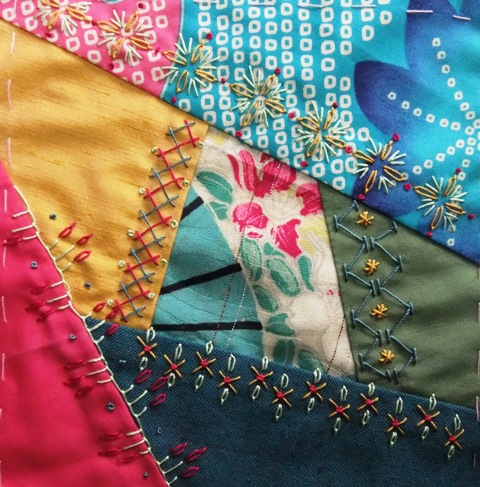
一か月前くらいになりますが、友だちと行った園芸店で青いケシの花の苗を見ました。それは堀文子さんがはるばる見に行った遠い山の向こうの全身を棘で武装したケシではありませんでしたが、青空のような色で庭にあったら素敵だろうと思いました。しかし異なる風土の植物ですから手入れの悪い私はきっと枯らすに違いなく、買い求めるのは止めました。ちょうどその頃、何年も前に作ったブロックを何とかしたいと眺めていましたので、ここに青い花を咲かせることにしました。

About a month ago I drove to a plants shop with my friend and saw a blue poppy. The color was like a sky. I liked it but I am not a green-fingered person. I didn't buy it but instead I would put a blue flower on this block I made a few years ago. The fabric printed a big blue flower is of Meisen kimono.


銘仙の大きな花をそのまま生かしたいと思ったので、とりあえず細かなステッチはあまりしないことにし、手持ちの装飾材料を大きく使うことにしたのですが、眺めている時間ばかり多く、ちょっとやっても気に入らずにほどいてばかりでした。全体の構成はこんなふうに、という感じでまとまったところで、細かなところにはこれからまた手を加えてゆきます。

After lots of trials I've arranged the whole construction first this time. Stitching for details would be later.


この布をボーダーに使おうと思っています。
And the borders might be made of these kimono fabrics.


Thursday, January 14, 2010

日本のお正月カラー New Year Days in Japan

1月14日は仙台ではどんと祭の日で、何故か毎年、それまで穏やかな日が続いていたとしてもその冬一番の冷え込みになります。お正月飾りを神社に持っていってごうごうと渦巻いて燃える火の山に投げ込み、その御神火にあたると一年無病息災に過ごせると言われています。新年もここまでという気分一新の日でもあります。

New Year Days are ending now. Today we have bonefires of the seasons ornament in shrines. It's said if we warm ourselves by the fire would be healthy without illness in this year.

昨日フィンランドの(何故かずっとフィンランドづいていますが)ヘリーナから私のAAページが届いたとメールがありました。お正月ムードの作品をお見せするラストチャンスに間に合ったという感じです。ヘリーナは昔、滋賀県にあったフィンランド学校で数年間、化学の先生をしていたことがあるので、日本のお正月が懐かしいのではないかと思い、こんなページを作って送りました。一茶の「めでたさも中位なりおらが春」を添えたのですが、ジャニーのように最高のめでたさを願った言葉を添えるべきだったかもしれないと後で思いました。

Here's my AA page for Helina in Finlland. She used to stay and teach in Japan years ago. I thought she would like to remember Japanese Oshogatsu (New Year Days).
I added a haiku poem of Issa Kobayashi: "Medetasa mo cyugurainari ora ga haru".


お寿司のチャームを見つけて買ってあったのがあり、面白いので使ってみました。
Don't you like this Sushi charm?


豪華な菊の花はトルコのオヤですが、ここにピッタリ決まりました。前にトルコのクレージーキルターのレンギンに分けて貰ったものです。
For chrysanthemums I used Oyas from Rengin Yazitas,Turkey.


ところで次の写真は、小学校時代のクラスメートから届いたお菓子です。日本人なら誰でも知っているお茶のときに頂く可愛らしい和三盆糖の御干菓子です。実はちょっと前にカナダのケリーととても面白いやりとりがあったのですが、偶然このお菓子にまつわるものでしたのでご紹介します。

I received two boxes of Japanese sugar candy. It was a big pleasant suprise from my old classmate of elementary school. I remember the days we played together.

And well, I would like to introduce a funny story between Kerry (a CQI list Mum) and me we have had.


彼女のブログのこのページをまずご覧下さい。

彼女いわく、バザーかマーケットで箱の可愛らしさに引かれて買ってみると中にも可愛らしい形のものが入っていた、キャンディー(お菓子)のような気もするがお菓子にしてはあまりに精巧に作ってある、来客用の小さな石鹸かも知れない、知っている人がいたら教えて欲しい。コメントも石鹸派が優勢のようでした。私のメールにケリーが返事をくれました。

「お菓子かなあ、とは思ったんだけど食べるのを躊躇ったのはこんな経験があるから。友だちから鳥の形のピンクッションをプレゼントにもらったとき小さな白い卵を抱えていたので、てっきりホワイトチョコだと思って口に放りこんだら何とそれが石鹸。以来よくわからないものは口に入れないことにしたというわけ」なのだそうです。


Here's her post on blog. Of course they are never soaps!! I commented then.

I sent her the photos of these candy boxes when I received. She replied me:

Thank you for showing me these Hideko. It is wonderful how lovely something as simple as candy can be - so delicately made and much too pretty to eat! Thank you again for solving my mystery.
»Did I ever tell you my funny story about why I did not taste them to see if they were candy before I knew for sure? It is because of something that happened a while back when we had the pincushion swap. The pincushion I received arrived in a nice tin. When I opened the tin there was a wonderful chicken pincushion nestled on a nest of raffia with three white eggs under her. I looked at the eggs and immediately thought - white chocolate - YUM! I popped one in my mouth - the eggs were soap!! I am more careful now to know what I am looking at before «I start to eat it! ROFLOL
Hugs,
Kerry

Saturday, October 28, 2006

着物あれこれ:帯締めと帯揚げ Kimono (6) Obi Accessories


着物を生かすのは帯、そして帯を生かすのは帯揚げと帯〆です。こういう呼び名をどういう英語に移したらいいのか考えていたところに、先日ご紹介したリザ・ダルビーさんの本、「Kimono」が届きました。英語でキモノのすべてが説明してあって、強力な参考書になりそうです。因みに帯揚げ、帯〆は、オビ・スカーフとオビ・コードでした。

Obi-scarf(obi-age) is a scarf length rectangle thin silk. A small pillow would be wrapped at the center with the scarf. It makes a swell inside the taiko at the back like a bustle and both ends of obi-age are tied in the front and plunged into the gap at the top of obi.

Obi-code is tied at the center of obi. It is chosen to accent its color.

ところでつい最近になってようやく、例の「さゆり」のDVD をレンタルして観ました。何だか私は、
どうしてこれが”日本”なのかという疑問ばかりが先に立ち、ストーリーに感情移入ができませんでした。本当の京都らしい景色、本当の日本らしい着物姿がところどころにあるものの、中国風の髪型や家並や着物スタイルが色濃くミックスされていて、好きではありませんでした。ハリウッドは”日本らしさ”よりオリエンタルな雰囲気があれば充分なのですね。成田の空港のお土産店には外国人向けの、日本の雅とはほど遠い何とも不思議な着物が売られていますが、あんな感じがしました。日本の方、海外の方、両方の感想をお聞きしたいものです。
I have seen the DVD of "The Memoirs of a Geisha" recently. I couldn't concentlate the story because of very strange mixture of Japanese and Chinese culture on screen. Why they liked the mixture better than pure and real Japanese kimono style? I have seen many pseudo-kimonos for souvenior in Narita airport shops, which are far different from our real kimonos. Why tourists like them better than real ones? Do you have any opinion?
Thursday, October 12, 2006

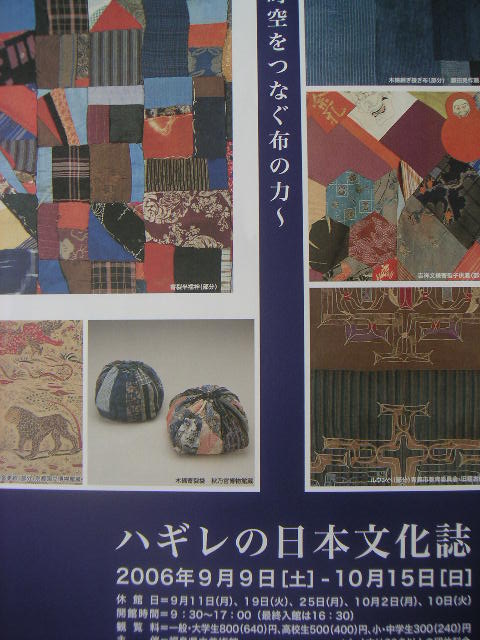
ハギレの日本文化誌 Old Japanese Patchworks


昨日、クレージーキルトの仲間たちで福島美術館で開催中の「ハギレの日本文化誌」展に行って来ました。バスで片道一時間ちょっとの楽しい遠足気分のお出かけでした。
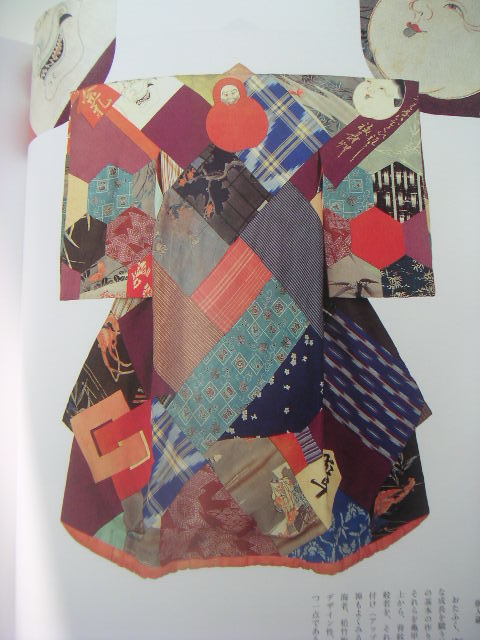
そして、中身の充実していたこと、これが宮城県美術館での催しならあと三回は行っていたかもしれません。日本にも「寄裂(よせぎれ)」という名前で昔からパッチワークはあったのです。今回展示されていたものは一部をのぞいてほとんどが江戸後期から明治にかけてのものです。
袈裟や風呂敷といった四角いもの、襦袢、胴着といった着る物、袋物など作られたものもさまざまです。接ぎ方も今さかんなパッチワークとほとんど変わりません。
写真撮影はできませんでしたから、ここに載せたものはすべて図録からです。
Yesterday I went to see the very interesting exhibition of old Japanese patchworks with friends. There were lots of patchworked kimonos, most of which were worn as Juban or underwearing kimono in 19th century. I will show you some photos out of the illustrated book.

子供の着物です。
Both are small children's juban.

後ろ身頃の背部分は正しくクレージーパッチワークですが、これにもちゃんと日本語があり、「やたら接ぎ」というのです。
You can see the back bodice is crazy patchworked.

これも子供用ですが、両肩におかめと般若の顔が覗くようにデザインされています。
This is a juban for a child, too. There are two different masks put on both shoulders' part.

神戸の貿易商が作らせた下着(襦袢)で男性用だといいますから、一体どんなハイカラ好きの洒落者であったのかと驚きます。小さな更紗のハギレが丹念に細かな針目でクレージーに接がれていて、本当に感心しました。
This is a man's juban. The caption said he was a wealthy trader. In those days chintz from western world were very expensive.

これは袱紗で、一つのブロックが九センチ角と、たぶんご想像よりずっと小さいのです。スクエア、ヘキサゴン、ストリング、クレージー、とパッチワークの接ぎ方は万国共通です。人間の考えることは自ずと同じになるのでしょう。
This is very small. Each block is 9x9cm square. The piecing patterns are almost same as American patchwork.

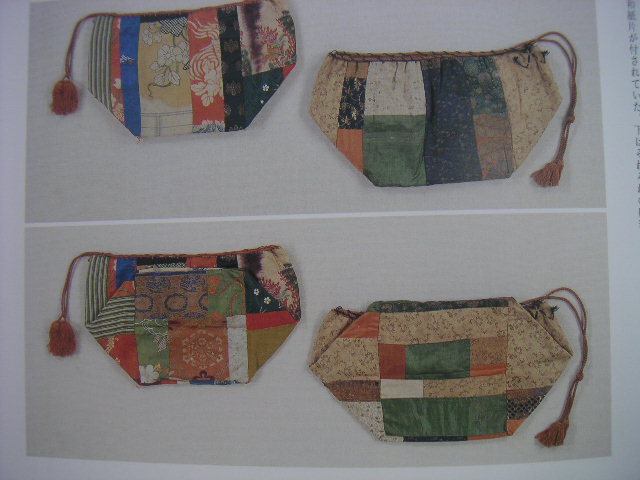
袋物もありました。指貫をいれるような小さなものから、お米を入れるランドリーバッグほどの大きさの物まで、サイズも使う布も用途に合わせていろいろです。
These are bags. Sizes and fabrics are in variety.

Thursday, September 28, 2006

着物あれこれ:帯  Kimono (5) Obi


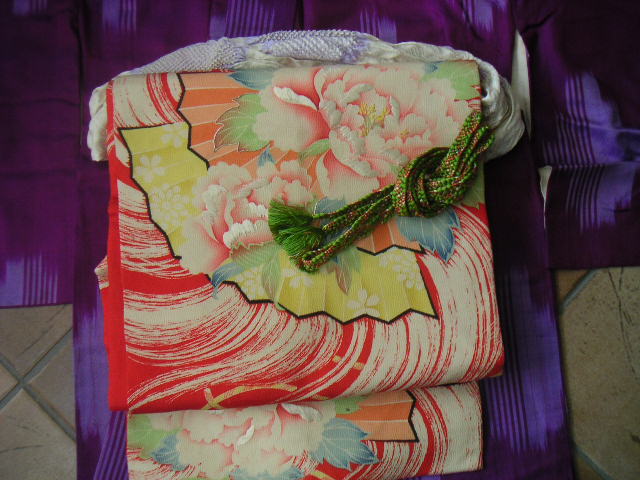
帯は着物姿を引き立てるもっとも重要な要です。どういう帯を組み合わせるかでその着物のイメージも変わります。ときには着物より帯の方が高価な場合もあります。幅は30センチ(並幅)、長さは約3~4 メートルもあります。結んだとき前の方が半分の15センチ幅で、後ろの結び方はいろいろありますが、一般的にはお太鼓です。美しい模様がお太鼓の中心にくるようにデザインされていて、後姿の方が華やかになります。
A kimono belt, Obi is a very important element of kimono style. It makes the whole style vivid or settled. It is said "(you should have)four obis for a kimono." Sometimes a coordinated obi is more expensive than kimono itself.
The width obi is 30cm and lengts about 320~400cm. The tying-body part (around one third of whole length) is folded into half, 15cm width. Nagoya-obi is already folded and sewed into this size.
The back style of tied obi is in variety. There are many gorgeous styles for young girls' beautiful furisode. But "o-taiko" is the most general one. "Taiko" means a drum and it's named from the shape.

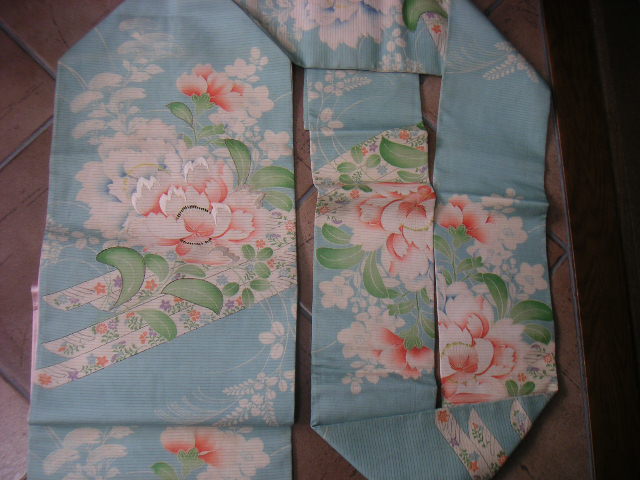
胴に巻く部分(帯全体の大体三分の一)があらかじめ半幅に仕立てられている名古屋帯です。名古屋帯は大正時代に始まったそうですから、以外に新しいのですね。知りませんでした。
This light blue obi is Nagoya-obi.

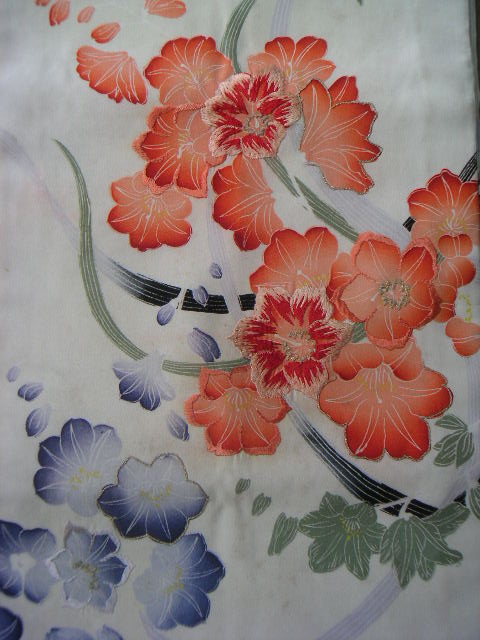
These are some example of obi patterns.They are the parts of o-taiko when tied. So you can see how gorgeous the back of kimono style is.

This obi is very Japanese; both colors and patterns.

This is rather westernised colors and patterns.

Friday, September 15, 2006

着物あれこれ:襦袢 Kimono (4) Juban


襦袢(じゅばん)という言葉はポルトガル語からきているそうです。ということは16世紀でしょうけれど、それ以前は襦袢はなかったのでしょうか?呼び方が違ったということでしょうか?服飾史について調べるべきかもしれませんが、そこまでは踏み込まないことにします。
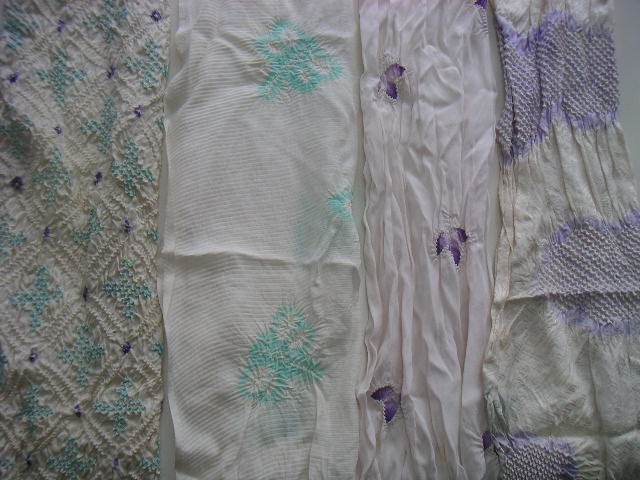
いずれにしても普通、私たちは着物の下に、半襟のついた襦袢を着ます。襦袢に使う布も柔らかで柄も美しく、クレージーキルトには大変重宝します。


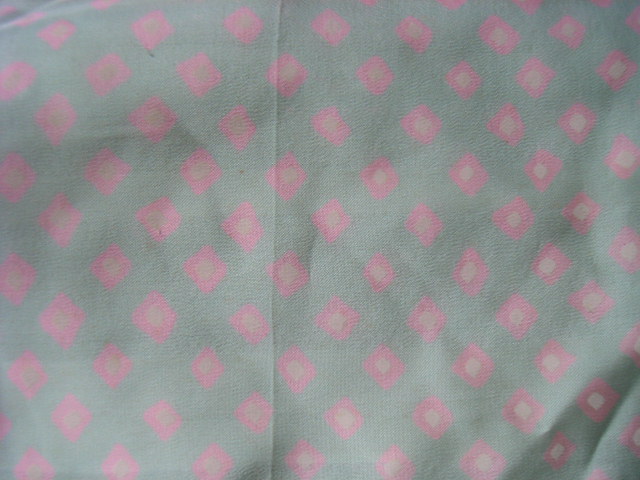
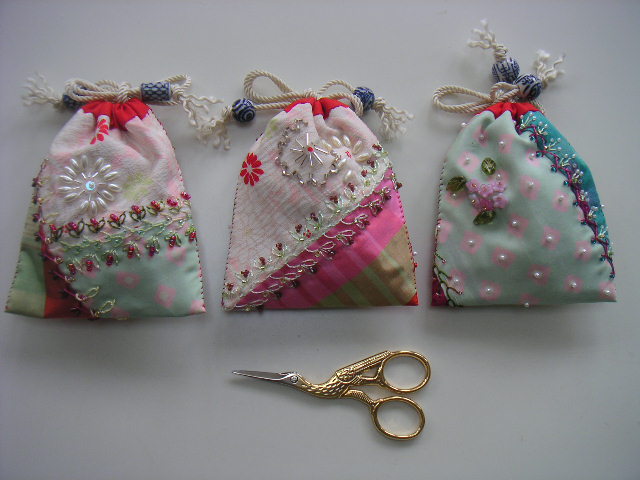
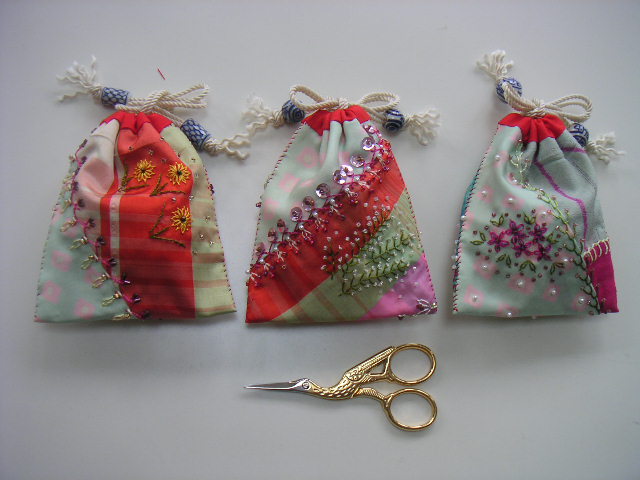
We wear a underdressing kimono, JUBAN. Juban is always full length while kimono is about 20~30cm longer than actual full length, as it would be folded up at the waist when we wearing. A white overcollar is always used to cover the juban neckline. So we can change it when soiled. Mostly very fine and soft silk fabrics are used for juban. Therefore you would love these fabrics for CQing too. You can see I used one of these juban fabrics for my jewelry bags to swap.

Friday, September 08, 2006

着物あれこれ:袷 Kimono (3) Awase


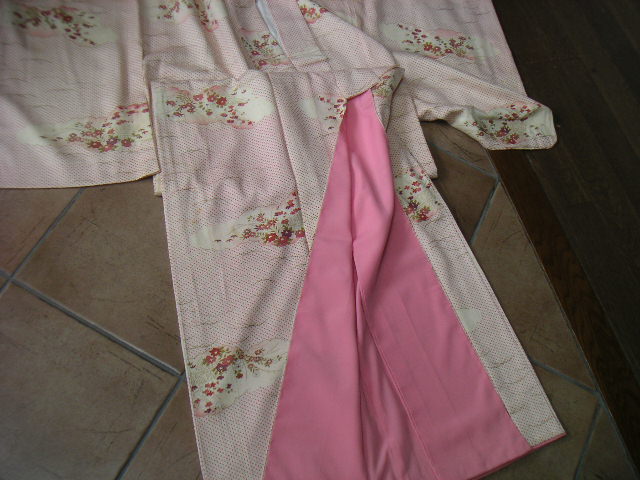
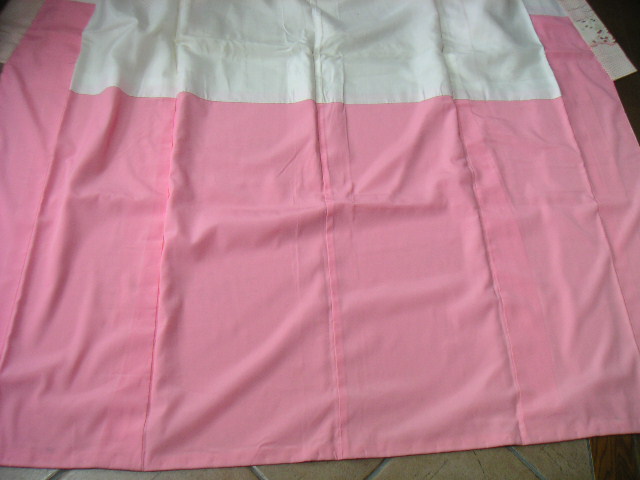
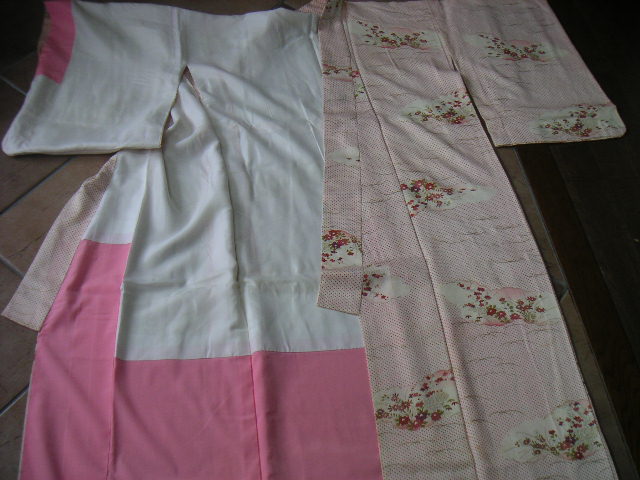
今度は袷(裏つき)の着物がどうなっているのか、を見ます。またもや古着で、上は小紋です。ピンクの部分が裾回しですが、八掛とも言います。広辞苑によると「見頃の裾に4布、おくみに2布、襟先に2布、合わせて八つに裁って用いるから」だそうです。知りませんでした。勉強になりますね。でも襟先ではなく、袖先に使っているように見えるのですが、わかる方、教えて下さい。
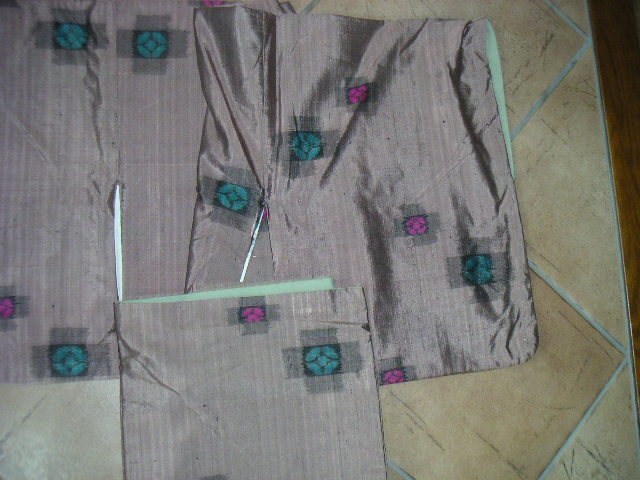
裾と袖口にちらっと見えるこの無地の色を何にするかで、着物の印象が変わります。日本人の配色のセンスの見せ所の一つでしょう。下の銘仙ですが、柄にはまったくないウグイス色を合わせてあるのが、私には「ムム」という感じでした。


These kimonos are called AWASE, meaning is "lined" or "double".(Last kimono without liner is HITOE, meaning "single".) Again both are old used ones. The pink flowery patterned kimono is KOMON, which is rather dressy. You might compare with your afternoon dress. The other one of last photo is MEISEN, very casual one.
You can see how it is lined from the photos. Eight colored rectangle pieces are used. Six for bottom and two for sleeve mouth.
And you can see how this color choice is important from the last two photos. This color would be very effective like a seam stitch for CQ.
I was so impressed by the warbler color used for MEISEN, because it's the color beyond my imagination from that kimono fabric.

Tuesday, September 05, 2006

着物あれこれ:単 This and That about Kimono (2) Hitoe


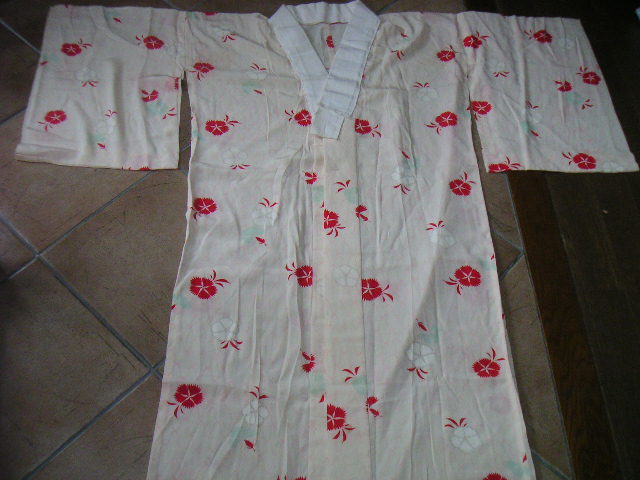
どちらも夏の単の古着です。花柄の方が古くて袖が長めです。昔、中学二年のときの家庭科で浴衣を縫ったのが、実際に自分の手で着物を縫った唯一の経験ですが、ほとんど憶えていません。でも運針の練習もして、何とか縫っただけ偉かったのかも。おくみを裁つときに間違えて接がないといけなくなったのですが、母に教えられながら、それを襟で何とか上手に隠した記憶があります。昔は縫い直しのときにそんなやり方をしたのかもしれません。海外の人に今回は、着物は36cm幅の反物を各部分ごと長方形に裁ち、縫い代の幅でサイズを調節して仕立てたということを理解してもらおうと思っています。

Both kimonos are old ued ones. They are worn in summer, for sewn without liner. When I was a junior high student, we learned how to sew a yukata, which is the most casual cotton kimono. That was my first and last lesson of sewing kimono. Always kimono is sewn up of rectangle pieces; 36cm width x (dress, sleeve, collar) length. But only two half (18cm) width pieces are added to the each front. Seam allowances would be changed, depending on the wearer's size. You can see the sleeve length of each kimono is different. Flowery patterns one's is longer and looks more ellegant.